
The existential crisis triggered by AI
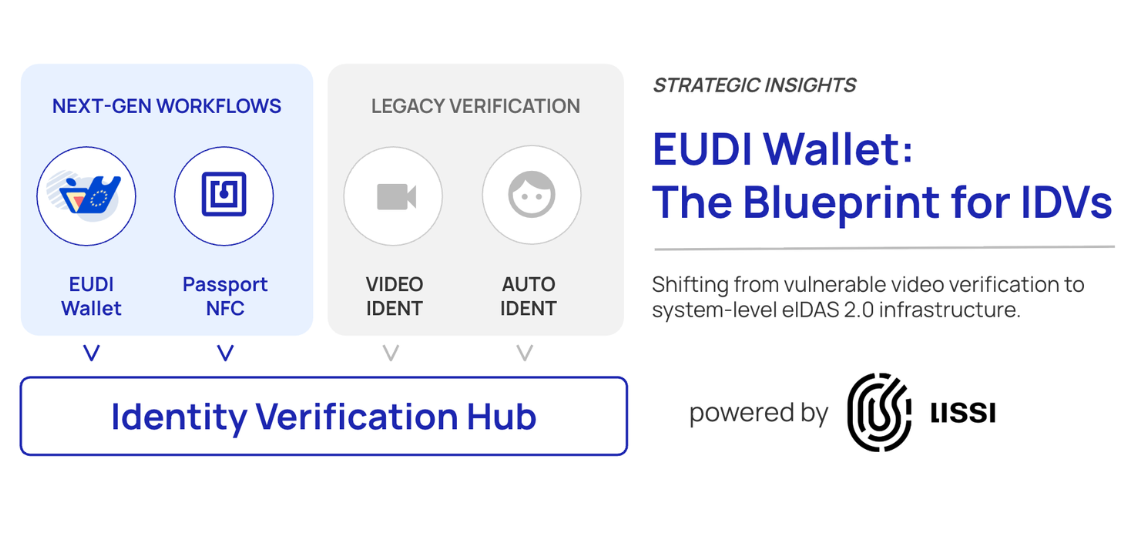
Let’s face the market reality directly: traditional video and auto-identification is dying incredibly fast. The rapid acceleration of generative AI and automated deepfakes has turned what was once a standard onboarding workflow into a significant security and operational vulnerability. As the identity verification (IDV) landscape reacts to these threats, the market is narrowing down to just two technically and legally viable pillars for high-assurance remote onboarding:
- Passport NFC chip-reading combined with advanced biometric liveness checks and QES.
- Official eIDAS-notified electronic identity means—spearheaded by the rapid rollout of the European Digital Identity (EUDI) Wallet.
For product managers and technical architects, this architectural shift isn't a distant compliance line item; it is a time-sensitive market race. Forward-looking IDV platforms are completely skipping long regulatory introductions and are actively deploying wallet-integration capabilities right now to capture early market share and protect their core product funnels from AI-driven fraud.
Decoupling the EUDI multi-tool: navigating the intermediary architecture
The European Digital Identity Framework completely reframes how identity verification platforms must design their backend systems. The EUDI Wallet is not a simple digital replacement for a plastic ID card; it functions as a highly sophisticated digital multi-tool. Beyond providing instant, high-assurance identification data via the Person Identification Data (PID), it natively integrates a wide array of transactional features:
- Strong Customer Authentication (SCA): For passwordless logins, secure payment approvals, and PSD2 compliant authentication.
- Qualified Electronic Signatures (QES): To digitize document flows and execute legally binding agreements directly from the device.
- Digital Attribute Issuance and Verification: Allowing users to receive and selectively share verified data points like age, address, or financial status.
Because the wallet handles everything from KYC to qualified signing, many forward-thinking identity platforms are actively exploring becoming Qualified Trust Service Providers (QTSPs). This status allows them to expand their commercial portfolios into ongoing, high-margin trust services by issuing qualified digital credentials (QEAA) on behalf of their clients.
However, for a platform provider, accepting this multi-tool introduces an entirely new architectural paradigm. In the eIDAS 2.0 ecosystem, identity verification platforms do not operate as standard Relying Parties (RPs). Under EU regulation 2024/1183 Article 5b(10), platforms assume the role of an eIDAS Intermediary.
This means a platform cannot simply tunnel all wallet interactions through a flat, single-tenant database architecture. To scale effectively and comply with data processing and deletion requirements, an intermediary must build and maintain a completely isolated, new logical environment for every downstream client it serves. This segregated infrastructure layer is required for managing client-specific use cases, routing discrete session keys, orchestrating separated cryptographic workflows, and feeding accurate telemetry into dedicated billing metric endpoints for precise downstream cost allocation.
The interoperability friction layer: protocols and certificates
Achieving seamless cross-border transaction capabilities introduces a fragile integration matrix. While all digital identity wallets conform to a centralized regulatory standard, the implementation across 30+ distinct national ecosystems remains fragmented on a national level. Each member state interprets configurations slightly differently, meaning that being theoretically "standards-compliant" does not guarantee real-world interoperability. To keep the platform functional, engineering teams face a continuous architectural checklist to eliminate runtime errors across various wallet variants:
- Protocol Churn Management: Platforms must continuously track and maintain low-level protocol updates, including strict subsets like the High Assurance Interoperability Profile (HAIP) and advanced querying mechanics driven by the requirements of the OpenID4VP protocol.
- Automated Certificate Handling: Intermediaries must manage the lifecycle of official Access and Registration Certificates. The system must dynamically route and automate requests to various national registrars to align with the distinct "intended use" of every single downstream client transaction without hitting operational downtime.
- Evolving Core APIs: Modern platform architectures must implement built-in support for next-generation access frameworks like the W3C Digital Credentials API (DC API) to eliminate QR code vulnerabilities and enable a native, browser-to-wallet system-level bridge via an OS-managed "bottom-sheet" interaction.'
Furthermore, optimizing the end-user conversion funnel requires deep attention to user experience edge cases. Platforms must intelligently adapt to the user's immediate technical context, smoothly orchestrating single-device flows via app-to-app deep linking for mobile users while simultaneously presenting multi-device flows using localized QR code triggers for desktop sessions. Validating these production flows in 2026 requires rigorous testing against dynamic sandboxes. Technical architects must continuously refine their configurations against moving targets, aligning their systems with the operational realities seen across localized pilot spaces like the official German wallet sandboxes and the French EUDIW Playground environment.
Build vs. buy: Integrating a EUDIW Connector as turnkey infrastructure engine
Building a proprietary intermediary solution to handle eIDAS 2.0 compliance from scratch is a high-risk endeavor that routinely demands a 12-to-18-month development roadmap and a seven-figure investment. For an identity verification platform, this DIY path creates a massive technical deficit. It forces elite engineering talent to manage volatile low-level protocol updates, run point-to-point wallet interoperability testing against dozens of national prototypes, and maintain a sprawling cryptographical backend. This diverts critical corporate resources away from an IDV platform's true intellectual property—proprietary risk scoring, advanced fraud modeling, and orchestration workflows.
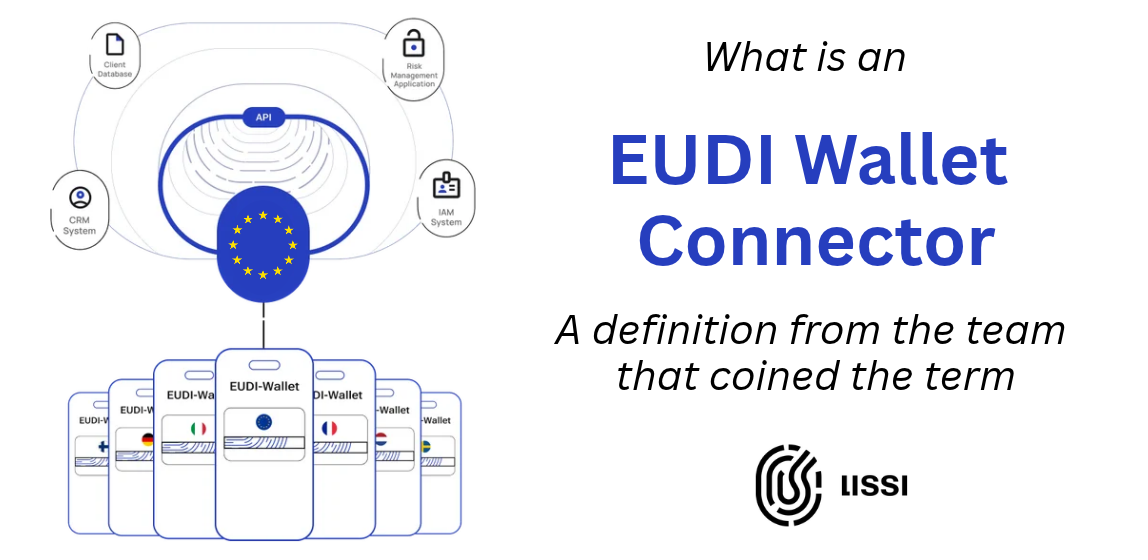
Lissi operates strictly as a specialized technology partner, not a competitor, providing the Lissi EUDI Wallet Connector as a turnkey software infrastructure layer that simplifies your entire wallet integration journey. As a core contributor to the technical standards and an active member of the WE BUILD Consortium which is addressing the Intermediary use cases, Lissi’s enterprise architecture is already trusted to empower more than 10 major intermediaries across the European digital identity ecosystem.
Rather than providing a generic API wrapper, the Lissi EUDI-Wallet Connector delivers a production-grade infrastructure package tailored specifically to the operational, billing, and isolation needs of enterprise-scale identity platforms:
- 100% Invisible White-Label Component: Shipped as a containerized software package , the engine deploys directly within your private cloud or on-premise infrastructure. Your brand remains the sole visible instance to the user, ensuring complete brand sovereignty with zero third-party vendor logo exposure.
- DevOps and Architecture Perimeter Control: Deep, out-of-the-box integrations with enterprise keystores guarantee that your platform maintains absolute, institutionally controlled ownership over all cryptographic key material. Natively stateless app pods enable seamless horizontal scaling capable of passing 10,000 transactions per second (TPS) loads.
- Use Case UI and Master Templates: A no-code management portal allows your product management teams to rapidly design, duplicate, and push standardized request templates out to hundreds of sub-tenants simultaneously.
- Granular Production Telemetry: Isolated multi-tenant environments feature separate, automated database purge routines to enforce strict GDPR compliance. Dedicated tenant-specific telemetry endpoints capture precise transaction data, piping real-time volume metrics straight into your existing internal financial reporting and billing infrastructure.
- Developer Enablement Suite: Stable, backward-compatible REST APIs with detailed Swagger documentation are supported by an isolated pre-production developer sandbox, allowing engineering teams to test, iterate, and safely go live with complex presentation sessions in a matter of hours.
Secure an easier, cheaper, and faster entry into the EUDI Wallet ecosystem with Lissi
The transition to the European Digital Identity Wallet framework is no longer a distant line item on an innovation roadmap; it is an immediate operational reality. Attempting an in-house build introduces profound implementation risks, forcing your engineering teams to perpetually chase shifting architecture frameworks and maintain interfaces across dozens of fragmented national protocols.
Lissi completely de-risks this mandatory transition. Our production-ready technology stack acts as a single, normalized gateway, allowing you to completely bypass low-level protocol complexity while instantly protecting your core customer onboarding and authentication funnels from automated fraud.
Collaborate with us for an easier, cheaper, and faster entry into the EUDI Wallet ecosystem. Reach out to our team today to discuss your integration and discover how our structured programs can accelerate your deployment timeline.
.png)